ROAR PANTHER Natural Stone Atelier Request Quote

Material type

Indian Green for refined Roar Panther surfaces.

Indian Green Marble is a rich forest green stone quarried in Rajasthan, India, with a dark olive-to-emerald background, deeper green movement and occasional white mineral markings. Its compact structure and strong polishing ability support flooring, countertops, bathroom vanities, fireplaces, staircases, wall cladding, façades and decorative furniture in interior or suitably detailed exterior applications. Polished, honed and leathered finishes are widely used, with brushed or textured treatments also available. Slabs should be batch-matched because colour and veining vary between quarry selections. Sealing and pH-neutral maintenance are recommended. AED pricing depends on green depth, quarry grade, slab size, thickness, finish, fabrication and installation.

Indian Green help desk

Need help choosing this stone type?

Share your product, room or fit-out detail and our designer line will guide you on slab selection, finish, sizing, price direction and care.

Parent material
Marble
Primary number
+971 55 000 0000
Secondary number
+971 54 000 0000
Designer number
+971 52 000 0000

Indian Green products

Shop Indian Green products

Browse product groups connected to Indian Green. Use the sticky filters to narrow by finish, category, application, color and price while staying inside this section.

Showing 0-0 of 0 products

Deep green stone with striking veins.

Irregular White Vein Network

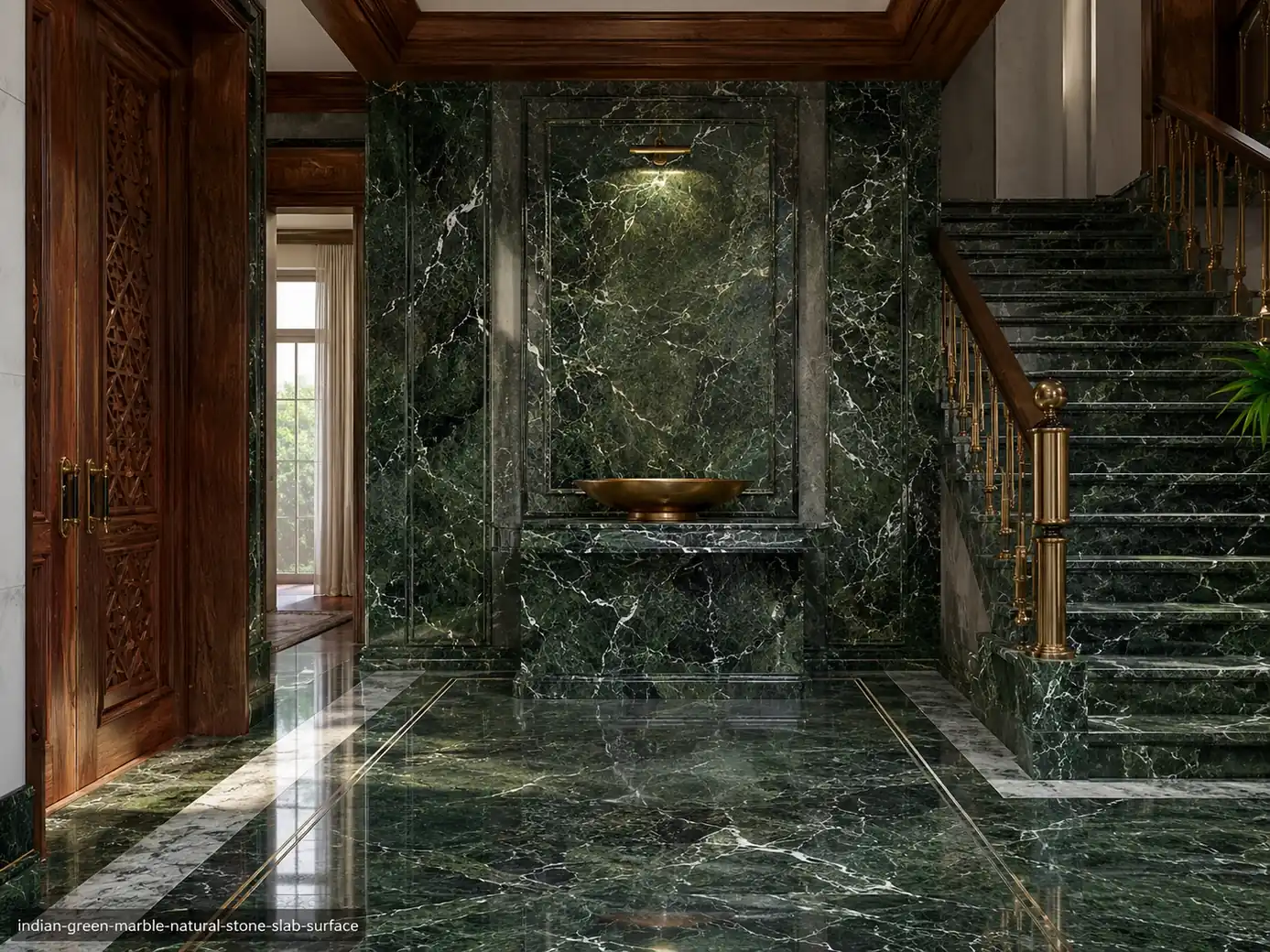
Raj Green Marble is a polished traditional architectural slab with a dense palette of forest green, bottle green, emerald, olive and occasional near-black areas. Approximate references include #1F4A38 for deep forest green, #35624B for emerald, #68785A for olive and #D9DDD2 for pale mineral details. Its pattern combines cloudy tonal shifts with irregular white, grey and darker-green veins, along with occasional branching lines, crystalline patches and soft brecciated movement. Darker slabs look relatively uniform from a distance, while more active pieces display stronger pale-green and white contrast. Polishing intensifies the saturated green depth and reveals the crystalline texture. Honing creates a velvety botanical surface with quieter veins.

Polished traditional architectural slab across an entrance floor, staircase, wall cladding and console with green variation.
Premium deep botanical material gives an entrance floor, staircase and walls forest-green depth with white and grey veins.

White Veins, Indian Heritage, Lasting Strength

Polished Traditional Architectural Slab: Indian Origin and Strength

Verde India Marble is principally extracted from the Rikhabdeo-Kesariaji belt approximately 60 kilometres from Udaipur in Rajasthan. India’s official mineral-industry documentation classifies much of the region’s green material as serpentine or green marble containing substantial serpentine mineralisation and notes that darker selections are also termed Verde Antique. This mineral composition means project specifications should request petrographic analysis rather than assuming the behaviour of ordinary calcitic marble. Directional white and black networks should be mapped before sink corners, narrow stair pieces or long projections are fabricated, while slab orientation should remain consistent across floors and walls. Polished, honed and brushed finishes are commercially available, but exterior and wet-area use require absorption, flexural, weathering and finish-specific slip data from the selected quarry lot. Large installations should use sequential slabs, and the adhesive, sealer and cleaning system should be tested on the actual premium deep botanical material because serpentine-rich stones can react differently from conventional marble.

Polished finishes, practical slab formats and botanical interiors.

High-Contrast Finishes, Sizes & Uses

Elegant high contrast cladding is widely available polished and honed, with satin, leathered, sandblasted and brushed finishes suitable for floors, walls and architectural furniture. Polished Green Flower Marble works well for reception counters, fireplace surrounds, bars and decorative panels, while honing or leathering is generally more practical for staircases, bathrooms and frequently touched surfaces. Full slabs commonly range from approximately 2,400–3,100 × 1,300–1,850 mm, with 20 mm and 30 mm as the principal thicknesses. Twenty-millimetre slabs are suitable for supported cladding and furniture, while 30 mm offers greater strength for counters, stair treads and projecting shelves. Interior uses include hotel lobbies, lift surrounds, bathrooms, dining tables, kitchen islands and decorative floor borders. Large adjoining areas should be sourced from one quarry batch and dry-laid before cutting. Wet floors require a finish with verified slip resistance, while countertops should be sealed and maintained using pH-neutral products.

Botanical walls, easy care, wise selection

Emerald Movement Cladding Guide

Green Flower Marble is well suited to lift lobbies, reception walls, retail interiors, washroom cladding, columns and feature façades where expressive emerald mineral movement can be used across repeatable panels. For tall interior or exterior wall cladding, specify panel thickness, dead load, fixing method, anchor positions, movement joints and allowable bowing rather than relying on tile adhesive alone. Exterior UAE use should be approved only after testing the selected lot for absorption, strength, salt exposure and thermal movement. Filled or honed surfaces are easier to maintain than deeply textured finishes; clean with neutral detergent, soft brushes and low-pressure rinsing. Buyers should compare slab bundles for shade, white-vein concentration, filler quality and thickness calibration. UAE suppliers stock Indian-origin material, while factory export references can begin near USD 15 per square metre; a realistic UAE material-only allowance is approximately AED 120–350 per square metre before cut-to-size production, anchoring and installation.

UseFinishThicknessIndoor / sqmOutdoor / sqmSupplyInstalledNotes
Marble Flooring Tiles Honed / Brushed 15 mm / 20 mm Indoor Use Preferred Outdoor Patios and Walkways AED 150–220/m² AED 90–130/m² Textured finish recommended for safer exterior use
Stair Treads Honed / Brushed 20 mm / 30 mm Indoor preferred — staircases, foyers and corridors Covered Outdoor Stairs Only AED 170–260/m² AED 70–110/m² Economical staircase option requiring secure fixing and sealed edges
Bathroom Vanity Tops Polished / Honed 20 mm / 30 mm Indoor preferred — bathrooms and powder rooms Limited — covered outdoor bathrooms only AED 170–260/m² AED 90–150/m² Affordable bathroom surface; protect from moisture and cosmetics; covered bathrooms only.
Feature Wall Panels Polished / Honed 15 mm / 20 mm Indoor preferred — lounges, lobbies and reception walls Limited — sheltered exterior feature walls AED 170–260/m² AED 80–130/m² Affordable decorative panels; indoor use preferred; sheltered exterior use only.
Dining Table Tops Polished / Honed 20 mm / 30 mm Indoor preferred — dining rooms and formal lounges Limited — covered outdoor dining areas only AED 170–260/m² AED 90–140/m² Affordable feature wall; sealed joints and secure fixing required.

Ideal for exteriors, floors and countertops

Exterior, Floors & Counters

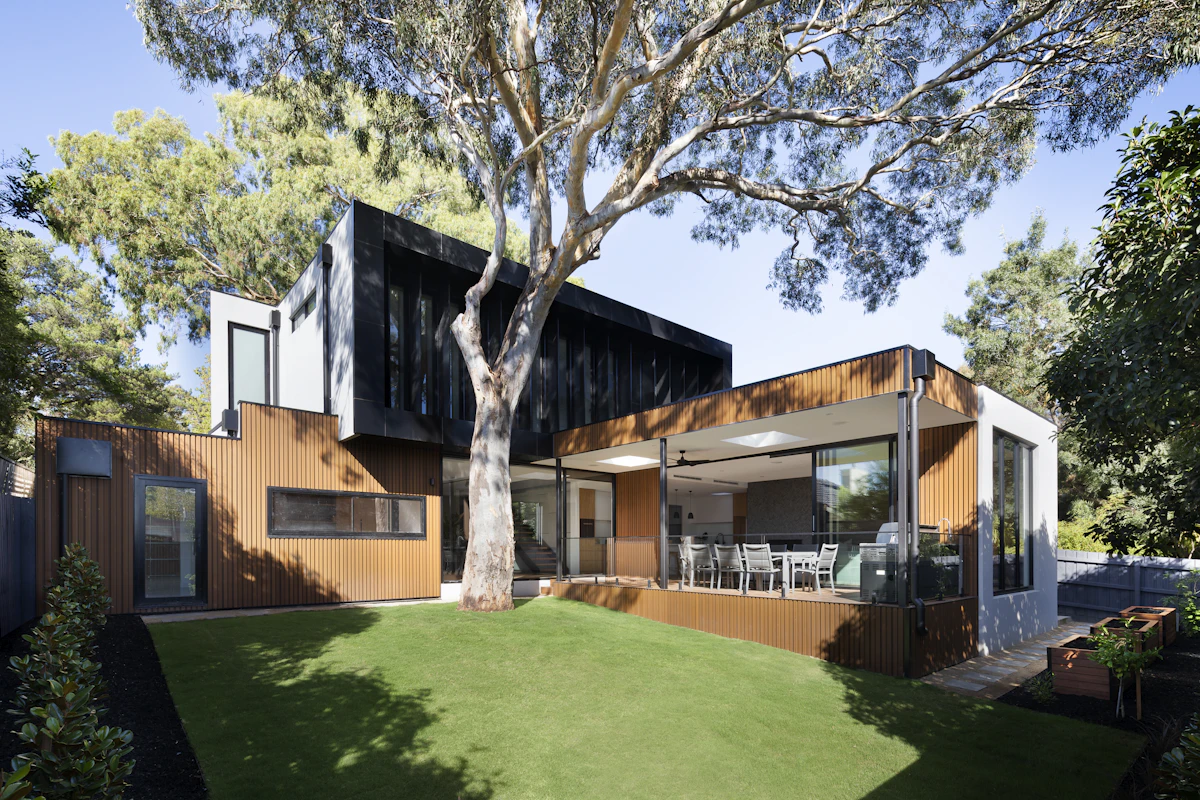
Green Fine Marble is a practical sophisticated heritage feature stone for covered exterior walls, shaded façades, entrance surrounds and sheltered landscape details, provided the selected batch is tested for the project environment. In the UAE, specify suitable exterior-grade adhesive, movement joints, mechanical restraint where required and a breathable sealer compatible with intense heat, dust and occasional moisture. For flooring, honed or flamed-texture selections provide better grip than polished pieces in entrances and semi-exposed zones. Interior polished floors suit halls and formal spaces. Countertops work well for kitchens, vanities and reception desks when sealed and protected from acids, direct chopping and hot pans. Confirm colour consistency across the required slab quantity before fabrication.

sophisticated heritage feature stone across terrace flooring and an outdoor kitchen countertop, with natural slab variation.
sophisticated heritage feature stone defines terrace flooring and outdoor kitchen countertop, with authentic slab variation.

Durable, versatile and exterior-capable, but porous, dark and maintenance-sensitive.

Versatility, Performance and Care

This Indian quarried stone combines a deep green background with white veins in polished, honed and textured slabs for interiors, selected exteriors, floors, countertops and walls. Its saturated colour improves natural luxury, so interior designers worldwide recommend balancing it with a restrained <a href="https://arifeenmarble.com/residential-staircase-granite-design/">residential staircase granite design</a>. Compare performance, thickness, finish, sealing, care, fabrication, supply and pricing before selection.

Benefits and Limitations

Pros

  • Rajasthan quarry provenance
  • Rich dark-to-medium green colouring
  • Lighter streaks create natural movement
  • Available polished honed and custom-textured
  • Suitable for interior exterior floors counters and walls

Cons

  • Commercially called marble but often serpentine-rich
  • Moisture-sensitive installation methods may be required
  • Green shades vary considerably
  • White veins complicate fabrication
  • Acid and cleaner compatibility should be tested.

High-Contrast Green-White Surfaces, Indoor–Outdoor Use & Performance Fit

Best Uses for Indian Green Marble Indoors and Out

Indian Green Marble works especially well for statement flooring, staircases, wall cladding and exterior architectural details where its deep green base and pale natural veining can withstand visual scale. Polished slabs create richer contrast for counters and feature walls, while honed or textured finishes are more practical for wet floors and outdoor areas. Select slabs together for colour consistency, and seal countertops and bathrooms against staining and acidic products.

UseWeatherConditionApplicationSlipCareBest forAvoid for
Large-format flooring tiles Best for interior floors; exterior floors require sealing and a textured finish Suited to level flooring zones away from standing water and harsh weather Residential halls, reception areas and premium showroom floors Honed or textured finishes improve traction in flooring applications Dust-mop daily, use neutral cleaner and reseal high-use flooring zones Characterful flooring for halls, receptions and showrooms Constant moisture, poolside use and untextured exterior flooring
staircase treads and risers Best indoors; shaded outdoor stairs suit dry weather with textured sealing Ideal for well-supported stairs with honed grip and controlled moisture Villa staircases, hotel entrances, duplexes and statement interiors Use a slip-conscious honed texture on stair surfaces Keep stairs grit-free, dry wet areas and maintain the honed traction finish Honed statement staircases in villas, hotel entrances and luxury duplexes Heavy-traffic staircases where grit and moisture remain uncontrolled
bathroom vanity tops Indoor installation is strongly preferred; use outside only in fully roofed, dry conditions. Ventilated bathroom counters with sealed edges and quick drying Statement bathrooms, spa suites, luxury villas and boutique hotel vanities Underfoot grip does not apply to this non-walking surface Use soft cleaning cloths, remove spills fast and reseal regularly Statement vanity tops for spas, villas and boutique hotels Unsupported vanity overhangs, stagnant moisture and aggressive disinfectants
wall-cladding panels Performs best on interior walls; outdoor use is limited to sheltered, arid conditions. Protected wall installations with dry substrates and routine joint inspection Low-contact feature walls in lounges, entrance halls and refined retail environments. Because Indian Green is mounted vertically, pedestrian slip testing is not relevant. Avoid abrasive brushes on Indian Green; clean gently and keep surrounding joints sound, dry and sealed. Indian Green is best reserved for dry wall panels in villas, hotels, offices and premium reception areas. Not recommended for rain-facing façades, unstable substrates or walls prone to moisture ingress, where protective detailing cannot be assured.
reception counters Indoor placement is strongly preferred; open-air use is limited to sheltered, low-moisture conditions. Dry reception settings with low-impact use, sealed surfaces and careful edge protection. Front-of-house counters in resorts, boutiques, offices and upscale apartment lobbies. The countertop is non-walkable, so slip classification is unnecessary; its fixed height eliminates underfoot exposure. Dust regularly and wipe service marks using only pH-neutral marble cleaner; use felt pads beneath accessories and protect exposed corners. Sealed concierge worktops in resorts, boutiques, offices and premium apartment lobbies. Outdoor concierge surfaces, persistent surface wetness, uneven base support and strong sanitisers.
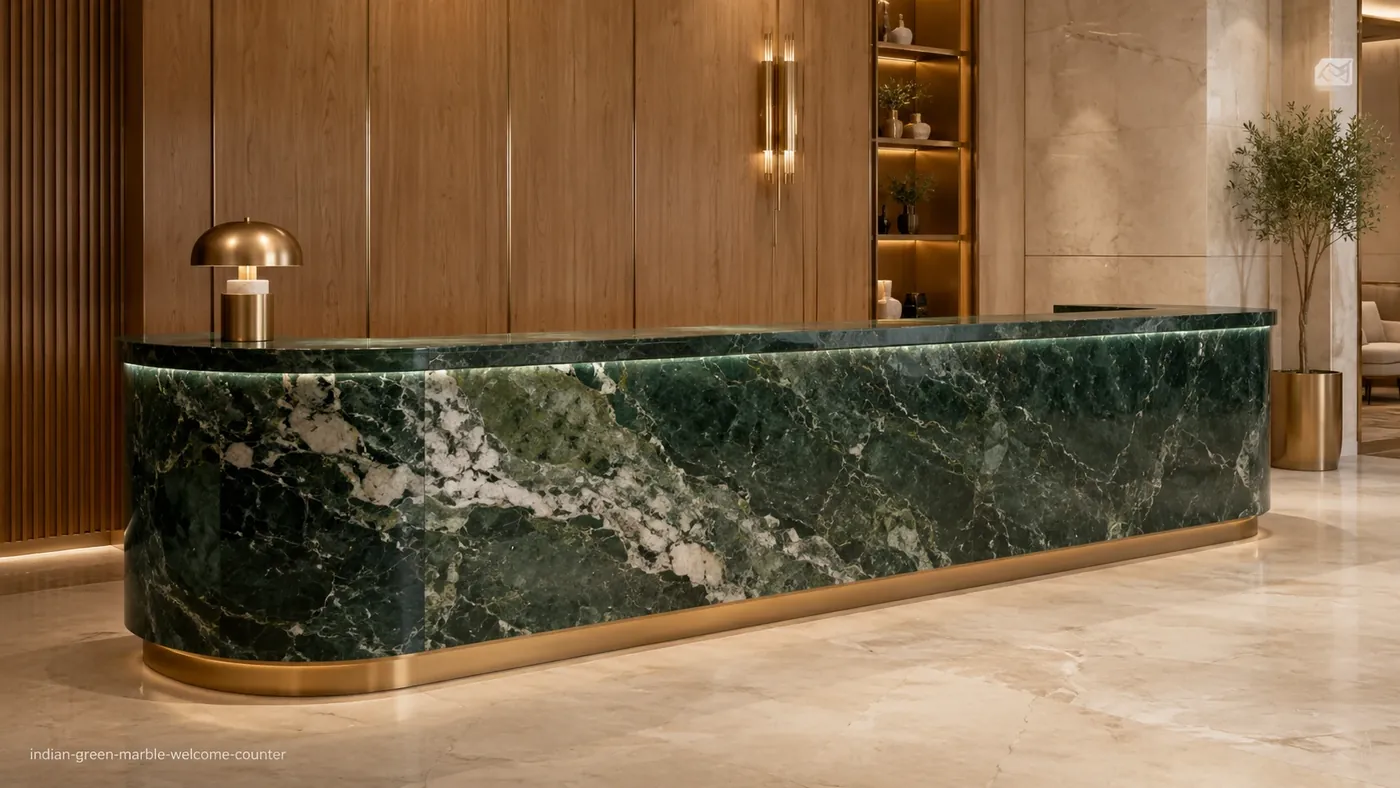
Indian Green Marble welcome counter with forest-green stone, white veins and subtle brecciated movement.
Indian Green Marble gives this welcome counter deep forest-green stone and contrasting pale mineral veins.

Elegant welcome counters.

Welcome Counters

A polished traditional architectural slab gives welcome counters a rich botanical identity that works well with brass, timber and neutral hospitality finishes. Verde India Marble should be digitally planned so stronger pale movement appears across the visitor-facing fascia while calmer dark areas remain beneath computers, writing zones and payment equipment. Use full support beneath the worktop and concealed reinforcement below raised guest shelves. Align seams with desk modules or changes in height and protect exposed corners from luggage. Seal the surface before use and place removable mats beneath sanitiser, printers, ink accessories and metal equipment.

Indian Green FAQ

Questions about Indian Green

Answer

What does Indian Green Marble's Rajasthan and Udaipur origin reveal about its forest versus emerald colour variation and olive and near-black undertones?

Indian Green comes from the Udaipur and Dungarpur districts of Rajasthan with important production around the Rikhabdeo region. Rajasthan’s mining authority identifies it as the trade name for serpentine marble which explains its compact dark-green character. Quarry selections range from forest and bottle green to brighter emerald while increasing serpentine and dark mineral concentration produces olive or near-black areas. White calcite markings are restrained in premium dark grades and more visible in strongly variegated blocks.